Polycarbonate Solid Sheets for Autonomous and Fully Electric Vehicles
Lightweight, High-Optical-Quality Materials for Modern Urban Mobility Platforms
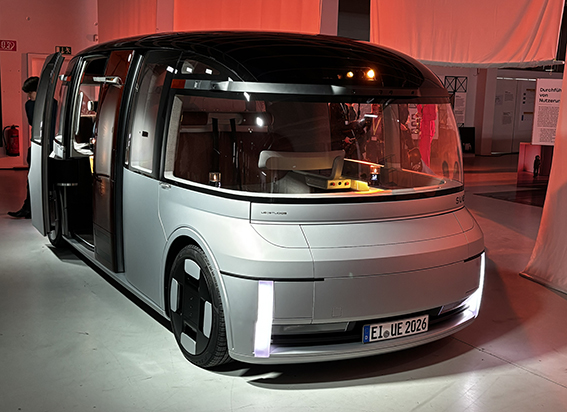
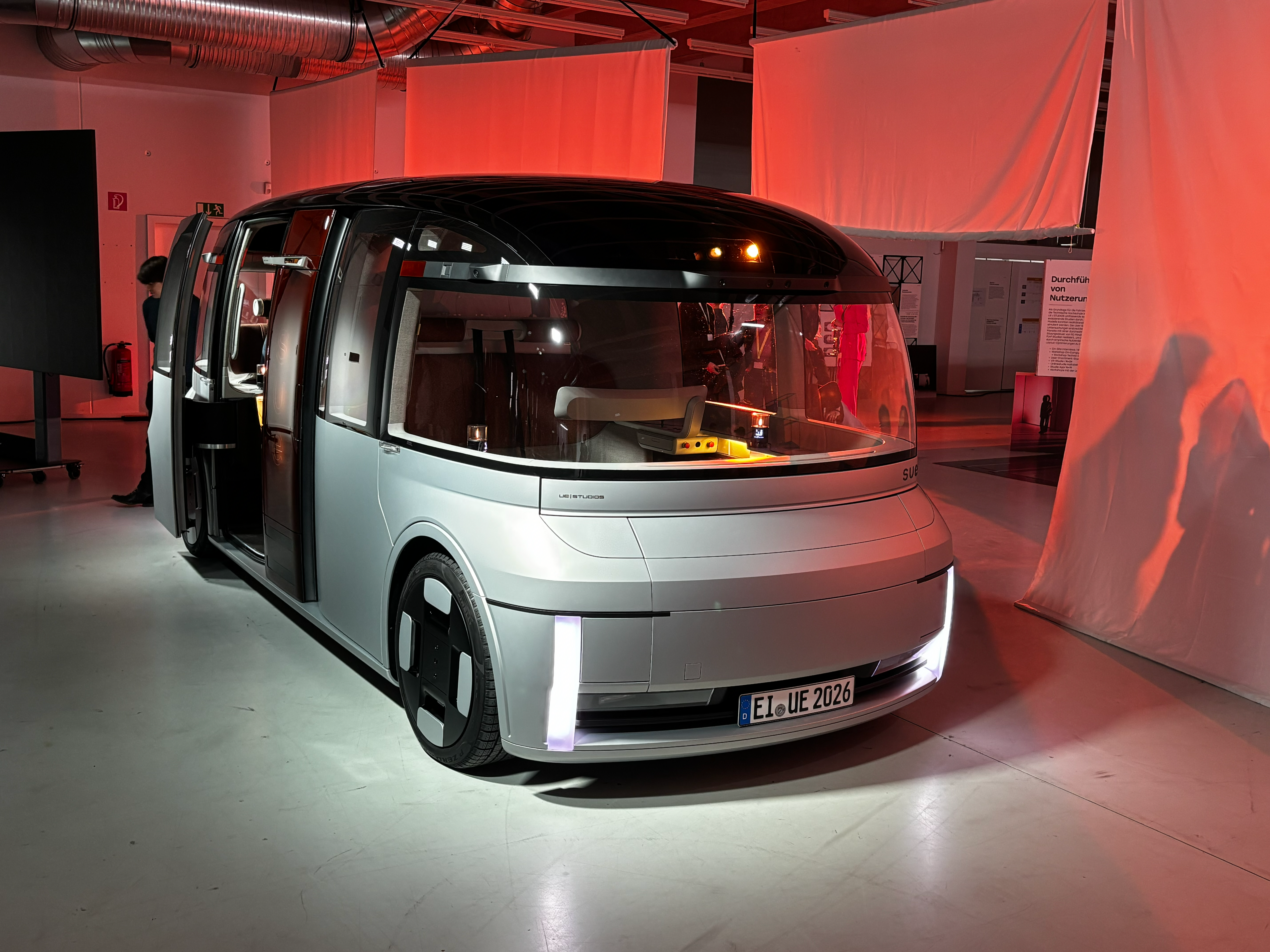
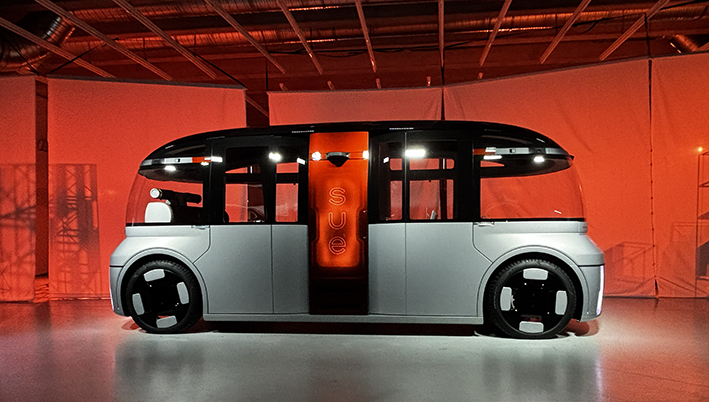
The Self-Driving Urban E-Shuttle (SUE) is a fully electric, road-approved autonomous vehicle developed for next-generation sustainable urban mobility. The vehicle was developed and engineered at the UE Studios of Uedelhoven GmbH & Co. KG in Germany.
To realise this autonomous electric vehicle platform, advanced automotive polycarbonate solid sheets were required to combine optical precision, structural performance, lightweight construction and sustainability within an integrated vehicle architecture.
As a material partner, the Exolon Group supplied high-performance polycarbonate solid sheets for key structural and design-relevant components of the vehicle. This enabled the successful integration of transparency, lightweight design and sustainable material concepts.
Technical Requirements for Materials in Autonomous Electric Vehicles
Autonomous and fully electric vehicles place demanding requirements on automotive materials. In particular, vehicle glazing and roof systems must provide:
- High optical quality with minimal distortion
- Reduced weight to improve energy efficiency
- High impact resistance as an alternative to glass
- Excellent thermoformability for complex aerodynamic geometries
- Sustainable and certified raw material concepts (e.g. ISCC PLUS)
For the Self-Driving Urban E-Shuttle, the key challenge was to implement a lightweight, transparent and sustainable material solution that meets the requirements of autonomous vehicle platforms.
Material Solution: Polycarbonate Solid Sheets for Glazing and Structural Components
Vehicle Glazing – 5 mm Polycarbonate Solid Sheets
Front, rear and side glazing were manufactured using 5 mm transparent polycarbonate solid sheets. This automotive solution delivers high optical clarity with low distortion.
Compared to conventional glass glazing, polycarbonate solid sheets enable significant weight reduction while maintaining high impact resistance. This makes them particularly suitable for electric vehicles and autonomous mobility platforms where lightweight design and safety are critical.
Roof Module – 6 mm Polycarbonate Solid Sheet with IR Absorber
The roof section integrates a 6 mm grey-tinted polycarbonate solid sheet based on ISCC PLUS-certified plant-based feedstock, supporting sustainable material solutions in the automotive sector.
An integrated IR absorber reduces interior heat build-up under high solar exposure and contributes to the thermal efficiency of the electric vehicle.
The combination of optical quality, thermoformability and sustainable raw material allocation makes polycarbonate solid sheets a high-performance material solution for modern automotive roof systems.
B-Pillar Cover – Polycarbonate Compound Sheet
A 6 mm polycarbonate compound sheet was used for the B-pillar cover. The material’s high formability enables precise adaptation to aerodynamic vehicle geometries.
Polycarbonate provides structural stability while reducing weight — a key advantage in lightweight construction for autonomous electric vehicles.
Its formability allows accurate integration into the aerodynamic vehicle design, combining structural integrity with a strong visual identity.
Why Polycarbonate Solid Sheets Are Suitable for Autonomous and Electric Vehicles
Polycarbonate solid sheets are increasingly used in automotive applications, electric mobility and autonomous vehicle platforms, as they fulfil multiple performance requirements simultaneously:
- Lightweight alternative to glass
- High impact strength
- Thermoformability
- High optical quality
- Design freedom
- Integration of functional additives such as IR absorbers
- Availability of sustainable ISCC PLUS-certified grades
These characteristics make polycarbonate solid sheets a key enabling material for next-generation mobility solutions.
Project Outcome: Material Innovation for Sustainable Mobility
The Self-Driving Urban E-Shuttle demonstrates how advanced polycarbonate solid sheet solutions can support the implementation of innovative, energy-efficient and sustainable transportation concepts in the automotive sector.
With this application, the Exolon Group reinforces its expertise in:
- Automotive glazing solutions
- Lightweight materials for vehicle construction
- Sustainable polycarbonate sheet systems
- Design-driven engineering applications